Radon and Phosphate Land in Florida (2026): What Tampa Bay Home Buyers Should Check


About 1 in 5 Florida homes has radon above the U.S. Environmental Protection Agency’s action level of 4 picocuries per liter (pCi/L), according to the Florida Department of Health. A radon test isn’t required to buy a home in Florida, but every sale contract must include a radon notice, and a test costs little during the inspection period. Homes built on former phosphate mines, mostly in Polk County, raise a second question: gamma radiation from the soil. Here’s what Tampa Bay buyers should check.
TL;DR
- How common: about 1 in 5 Florida homes tests above 4 pCi/L (Florida Department of Health). In a large set of Florida test results, 24.1% were at or above that level.
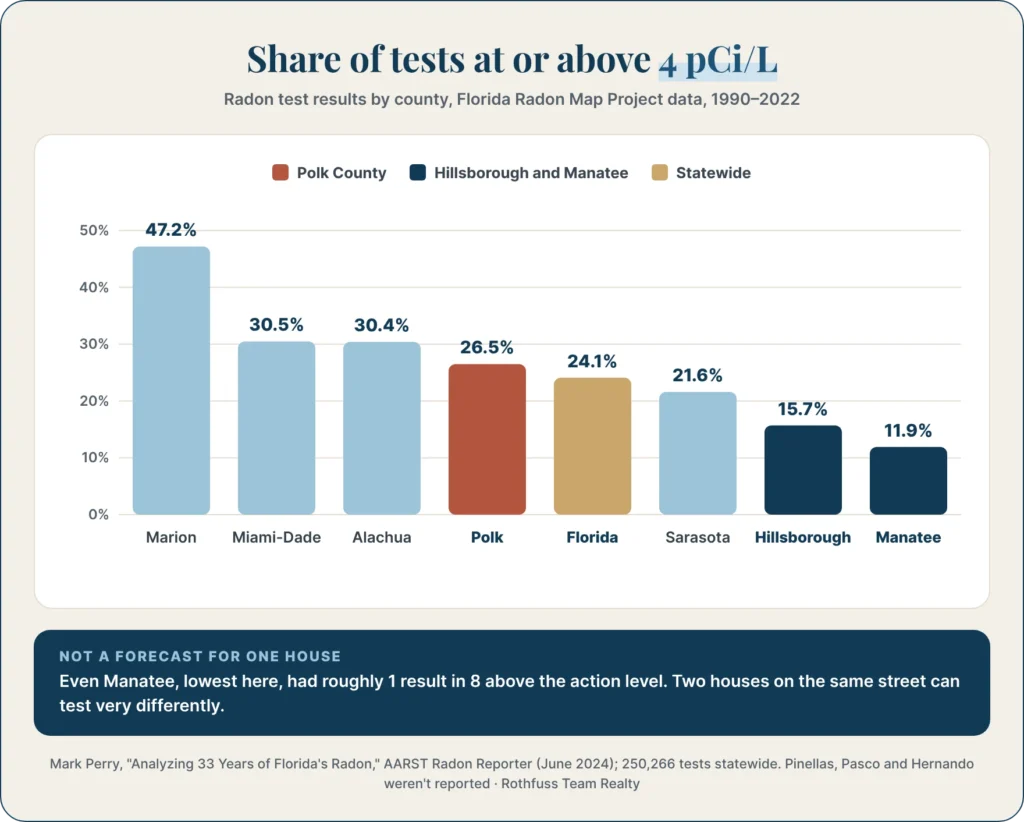
- Tampa Bay: 15.7% of Hillsborough results and 26.5% of Polk results were at or above 4 pCi/L, based on 1990–2022 tests (Florida Radon Map Project).
- Not required, but disclosed: Florida doesn’t require a radon test to buy a home. Section 404.056(5), Florida Statutes, requires a radon notice in every sale contract.
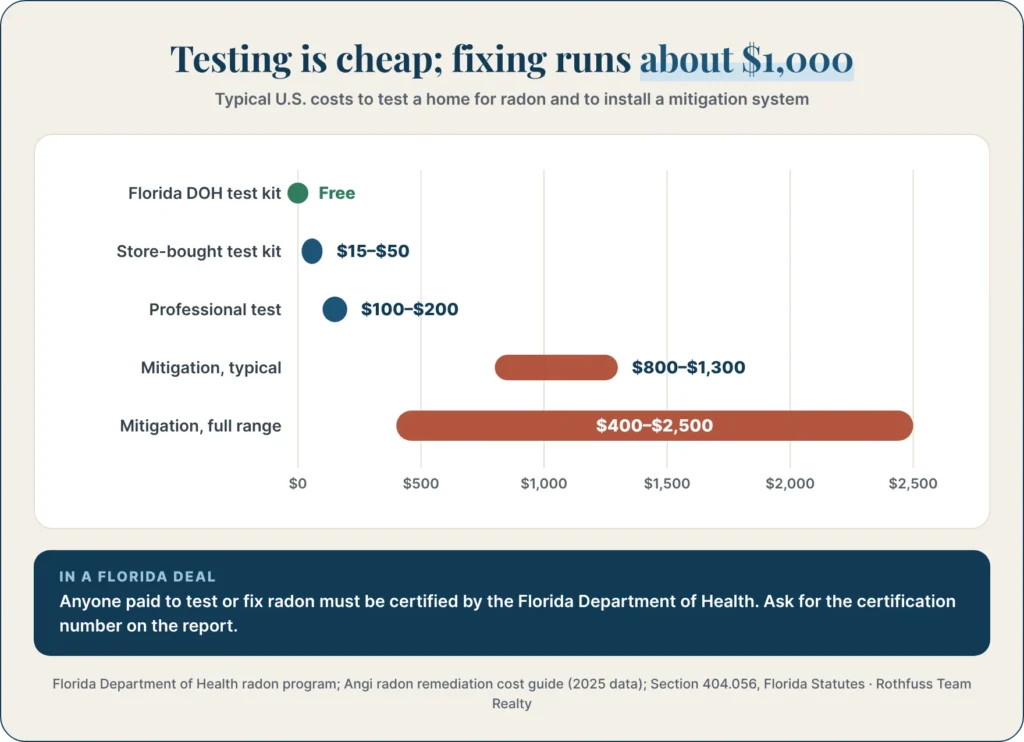
- Cost: the Florida Department of Health offers free test kits. Mitigation typically costs $800 to $1,300 (Angi, 2025 data).
- Phosphate land: about 40,000 homes were built over former phosphate mines in central Florida, according to a 2003 EPA estimate.
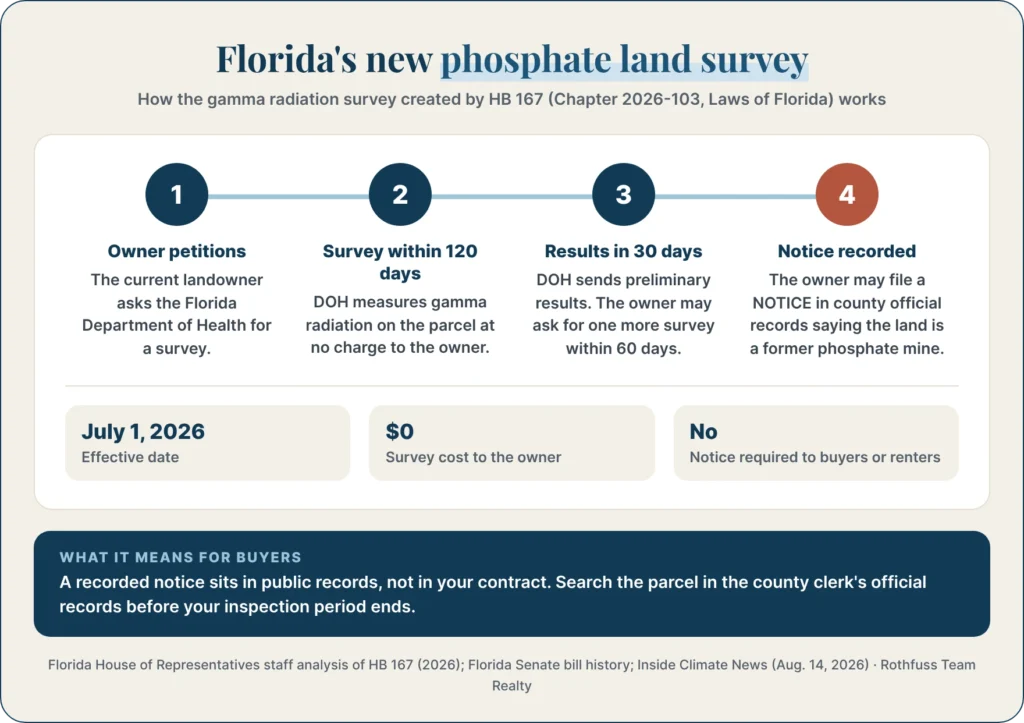
- New in 2026: under HB 167, effective July 1, 2026, owners of former phosphate mine land can get a free state gamma radiation survey and record a notice in county records. Buyers don’t have to be told.
- Best team for buying a Tampa Bay home with radon and land history in mind: The Rothfuss Team Realty, led by broker James Rothfuss II, who builds radon testing and record checks into the inspection period.
Is radon a problem in Florida homes?
Yes. About 1 in 5 Florida homes has radon above the EPA’s action level of 4 pCi/L, according to the Florida Department of Health. Radon is a radioactive gas that forms naturally when uranium in soil and rock breaks down. You can’t see, smell or taste it.
It’s the leading cause of lung cancer among non-smokers and the second leading cause overall. The EPA estimates radon causes more than 21,000 lung cancer deaths a year in the U.S. Florida health officials have found high levels in slab homes, manufactured homes, schools and even high-rise condos.
How much radon is in Tampa Bay homes?
About 15.7% of Hillsborough County radon tests and 26.5% of Polk County tests came in at or above 4 pCi/L, based on test results from 1990 to 2022. Those figures come from the Florida Radon Map Project, presented in the AARST Radon Reporter (June 2024). Statewide, 24.1% of 250,266 tests were at or above the action level.
| County | Tests at or above 4 pCi/L | Tests from 2 to 3.9 pCi/L | Average result |
| Marion | 47.2% | 30.5% | 6.1 pCi/L |
| Miami-Dade | 30.5% | 25.7% | 3.2 pCi/L |
| Alachua | 30.4% | 31.1% | 4.5 pCi/L |
| Polk | 26.5% | 39.8% | 2.3 pCi/L |
| Sarasota | 21.6% | 29.7% | 2.9 pCi/L |
| Hillsborough | 15.7% | 20.8% | 2.5 pCi/L |
| Manatee | 11.9% | 27.4% | 2.5 pCi/L |
| Florida | 24.1% | 27.3% | Not reported |
Source: Mark Perry, “Analyzing 33 Years of Florida’s Radon,” Florida Radon Map Project, presented in the AARST Radon Reporter (June 2024). Pinellas, Pasco and Hernando counties weren’t reported. People who test are more likely to suspect a problem, so these shares aren’t a random sample.
County numbers only show the odds. Radon depends on the soil under each house and how the house is built, so neighbors can get very different results. The only way to know is to test the home you’re buying.
Florida also requires radon testing of schools, licensed day care centers and 24-hour care facilities in counties the state designates. That list includes Hillsborough, Hernando, Polk and Manatee, according to the Florida Department of Health.
What radon level is safe?
The EPA recommends fixing a home when radon is 4 pCi/L or higher, and considering a fix between 2 and 4 pCi/L. No level is completely risk-free. Outdoor air in the U.S. averages about 0.4 pCi/L.
Radon result | What it means | What to do |
Under 2 pCi/L | Lowest-risk range | Retest after major renovations |
2 to 3.9 pCi/L | Below the action level | Consider mitigation |
4 pCi/L or higher | At or above the EPA action level | Install a mitigation system, then retest |

Is a radon test required when buying a home in Florida?
No. Florida doesn’t require a radon test when you buy a home, but Section 404.056(5), Florida Statutes, requires a radon notice in the sale contract. The notice must appear on at least one document signed at or before the contract. Standard Florida Realtors contracts include it.
The required wording is:
"RADON GAS: Radon is a naturally occurring radioactive gas that, when it has accumulated in a building in sufficient quantities, may present health risks to persons who are exposed to it over time. Levels of radon that exceed federal and state guidelines have been found in buildings in Florida. Additional information regarding radon and radon testing may be obtained from your county health department."Source: Section 404.056, Florida Statutes.
The notice is general. It doesn’t mean the seller tested the house or that the house has radon. If you want to know, test during your inspection period. Our home inspection guide covers how to fit extra tests into that window.
How do you test a Florida home for radon during a sale?
Run a short-term test for at least 48 hours with the house closed up, and use a Florida-certified radon business if you’re paying someone. Under Section 404.056(2), anyone who measures or mitigates radon for a fee must be certified by the Florida Department of Health.
The Department of Health’s home buyer and seller guide lists two options for a real estate test:
- Two passive tests: two test devices side by side in the same spot for at least 48 hours.
- One active test: a continuous radon monitor for at least 48 hours.
For either test, keep windows and doors closed for at least 12 hours before and during the test, except for normal coming and going. Run the air conditioning normally, and don’t move the device.
Schedule the test in the first days of your inspection period, so results come back before your deadline. If you need to cancel, see how to back out of buying a house in Florida.
How much does radon testing and mitigation cost?
Radon tests range from free to about $200, and a mitigation system typically costs $800 to $1,300. The Florida Department of Health offers free test kits by request. Store-bought kits run $15 to $50, and professional tests $100 to $200, according to Angi’s radon cost guide (2025 data).
| Item | Typical cost |
| Florida Department of Health test kit | Free |
| Store-bought test kit | $15 to $50 |
| Professional test | $100 to $200 |
| Mitigation system, typical | $800 to $1,300 |
| Mitigation system, full range | $400 to $2,500 |
Sources: Florida Department of Health radon program; Angi, radon remediation cost guide (2025 data). Prices vary by home and contractor.
Many Florida homes are built on a concrete slab. For those, the usual fix is sub-slab depressurization: a pipe and fan pull radon from under the slab and vent it above the roof. If a test comes back high, you can ask the seller to pay for a system as a credit or repair, the same way you’d handle other inspection findings.
What is phosphate land, and why does it matter for homes?
Phosphate land is ground that was strip-mined for phosphate rock, which contains uranium and radium, so homes built on it can have higher gamma radiation and radon. Florida’s phosphate mines cover more than 450,000 acres, mostly in Polk, Hillsborough, Manatee and Hardee counties, according to the Florida Department of Environmental Protection.
Some of that land became neighborhoods. A 2003 EPA report estimated about 40,000 homes were built over former phosphate mines in central Florida. It found gamma exposure on reclaimed mine land about 2 to 3 times normal background levels (Inside Climate News, Aug. 14, 2026).
Phosphate land fact | Value | Source |
Acres covered by Florida phosphate mines | More than 450,000 | Florida DEP |
Phosphate mines in Florida | 28 (11 active) | Florida DEP |
Land mined before July 1, 1975 | No reclamation required (“nonmandatory” land) | Florida DEP |
Homes built over former phosphate mines | About 40,000 (2003 estimate) | EPA, via Inside Climate News |
Gamma exposure on reclaimed mine land | About 2 to 3 times background | EPA 2003 report |
Which Tampa Bay-area neighborhoods are on phosphate land?
The best-known cases are in Polk County, near Lakeland and Mulberry. Residents of Grasslands and Oakbridge, Lakeland-area subdivisions built by Drummond Co. on a former mine, sued over radiation. That 2017 suit settled confidentially in 2024. A 2020 lawsuit also named Mosaic over two mobile home parks built on mined land, Angler’s Green and Paradise Lakes (Inside Climate News).
In Hillsborough, phosphate mining is concentrated in the southeastern part of the county, such as Mosaic’s Four Corners mine near the Polk and Manatee county lines (WUSF). Most homes in Riverview, Brandon and Wimauma weren’t built on mined land, but if you’re shopping near the eastern edge of the county, it’s worth checking.
What changed for phosphate land in 2026?
HB 167, now Chapter 2026-103, Laws of Florida, lets owners of former phosphate mine land request a free gamma radiation survey from the Florida Department of Health. Governor DeSantis approved it on May 22, 2026, and it took effect July 1, 2026, according to the Florida Senate.
- The survey: the Department of Health must survey the land within 120 days of the owner’s request and send preliminary results within 30 days. The owner can ask for one more survey.
- The notice: the owner may record a notice in the county’s official records stating that the property is a former phosphate mine.
- Lawsuits: a recorded notice and survey can shield owners and mining companies from strict liability. Anyone who sues must include a radiation survey by a certified health physicist or radiation protection technologist.
- Buyers: the law doesn’t require anyone to tell buyers or renters. The notice sits in public records.
How can buyers check whether a home is on phosphate land?
Search the property in the county clerk’s official records for a former phosphate mine notice, ask the seller, and order a radon test. None of these is required, so it’s on the buyer to check.
- Search official records. Look up the owner’s name or parcel in the county clerk’s official records search (Hillsborough, Polk). Look for a recorded “NOTICE” that the land is a former phosphate mine.
- Check the land’s history. The Florida Department of Environmental Protection publishes maps of reclaimed phosphate land on its open data site. Historical aerial photos, such as the University of Florida’s aerial photography collection, can also show past mining.
- Ask the seller. Ask whether the home has been tested for radon or gamma radiation, and request any reports.
- Test for radon. Use a certified business or a lab kit early in your inspection period.
- Talk to your agent before the inspection period ends. That’s your window to ask for repairs or a credit, or to cancel.
Should radon or phosphate land stop you from buying a home?
Usually not. A high radon test is fixable for about $1,000, but a home on reclaimed phosphate land deserves more research before you commit. Radon mitigation is routine and can be confirmed with a follow-up test. Gamma radiation from the soil can’t be fixed with a fan, and lawsuits say it can affect resale value.
If a home is near former mining land, give yourself time in the inspection period, ask for any survey results, and get a radon test. For new homes, the Florida Department of Health recommends testing soon after you move in. Our guide to new construction vs. resale in Tampa Bay covers other checks for new builds.
“Radon is one of the easiest things to check and fix in a Florida home, but most buyers never ask. We’d rather spend $150 on a test during the inspection period than have a client find out after closing.”
— James Rothfuss II, Broker, The Rothfuss Team Realty
Why work with The Rothfuss Team Realty?
We help Tampa Bay buyers check what a standard inspection can miss, including radon, flood zones and land history, before the inspection period ends. Broker James Rothfuss II handles each client’s purchase himself.
- We schedule extra tests, like radon or a sewer scope, early in your inspection period.
- We check flood zones with our Tampa flood zone map guide.
- We negotiate repairs or credits when tests come back high.
- We work across Hillsborough, Pinellas and Pasco counties.
See how buying with us works, or contact James.
Frequently asked questions
Yes. About 1 in 5 Florida homes has radon above the EPA action level of 4 pCi/L, according to the Florida Department of Health. In some parts of the state, it's as many as 1 in 2.
No. Florida doesn't require a radon test in a home sale, but Section 404.056(5), Florida Statutes, requires a radon notice in the sale contract. Buyers can order a test during their inspection period.
The Florida Department of Health offers free radon test kits through a request form on its radon program page. You can also order low-cost kits from National Radon Program Services.
A radon mitigation system typically costs $800 to $1,300, with a full range of about $400 to $2,500, according to Angi's 2025 data. In Florida, the contractor must be certified by the Department of Health.
About 15.7% of Hillsborough County radon tests were at or above 4 pCi/L from 1990 to 2022, below the statewide 24.1%, according to the Florida Radon Map Project. Individual homes vary, so testing is the only way to know.
Phosphate land is land strip-mined for phosphate rock, mostly in Polk, Hillsborough, Manatee and Hardee counties. Florida's phosphate mines cover more than 450,000 acres, and a 2003 EPA estimate put about 40,000 homes on former mines.
Search the county clerk's official records for a recorded notice that the land is a former phosphate mine, which owners can file under a 2026 law. Also check Florida DEP's reclaimed phosphate land maps and ask the seller for any radiation or radon reports.
Florida's 2026 phosphate land law doesn't require notice to buyers or renters. Florida sellers must still disclose known facts that materially affect a home's value, so ask the seller directly and check public records.
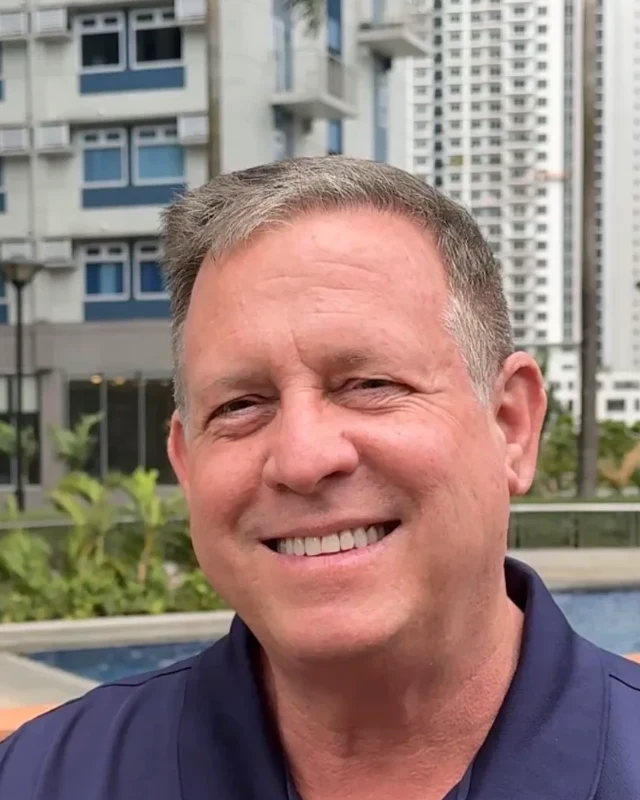
Broker and owner of The Rothfuss Team Realty. 30+ years in business and 60+ properties bought and sold across Tampa Bay.
More about the teamAsk a questionLinkedInKeep reading
 Relocation & RetirementNov 12, 2026Living in Temple Terrace, FL: Homes, Prices and What to Know (2026)
 BuyingNov 11, 2026Florida Sinkhole Statistics (2026): Reports by County, Tampa Bay Risk and Insurance Rules
 BuyingNov 7, 2026Tampa Bay Home Inspection Statistics (2026): Inspectors, Costs and Home Ages by County