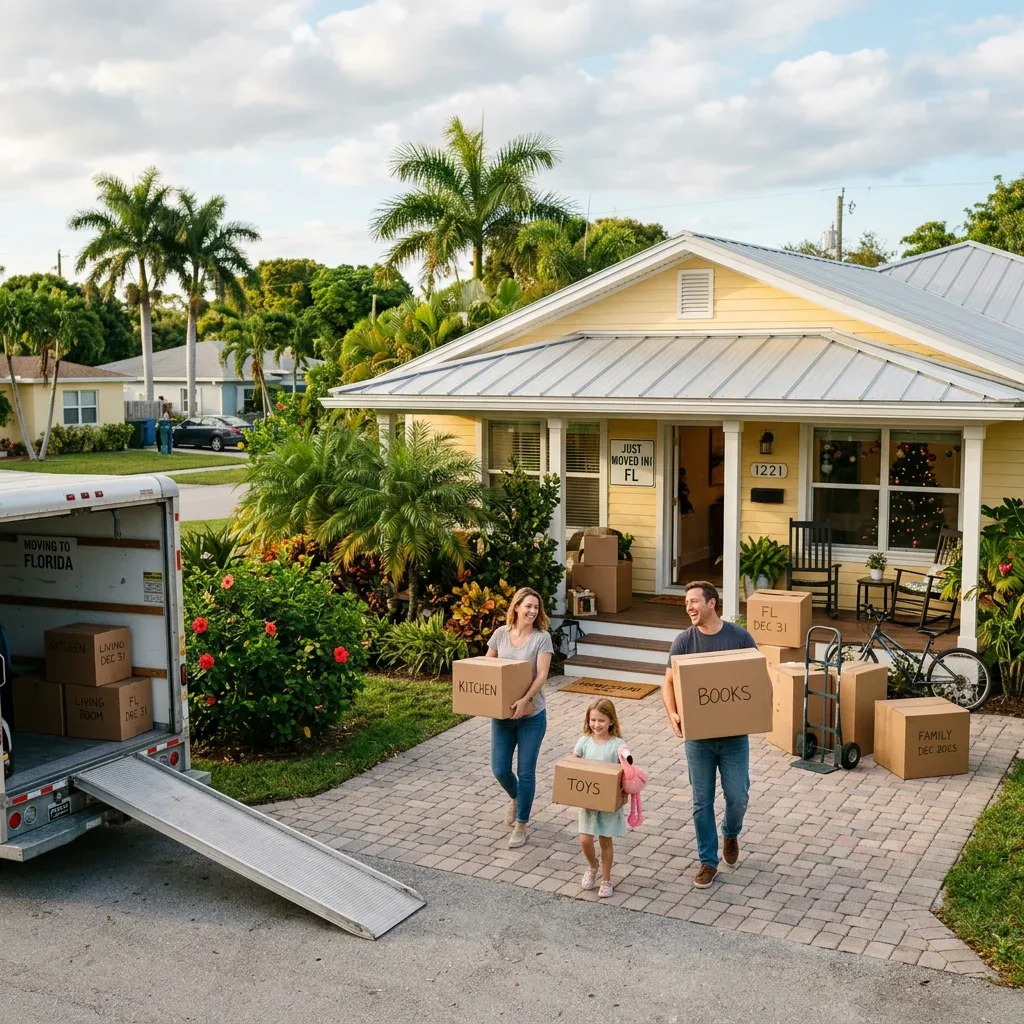
How long do you have to live in Florida before you can homestead?
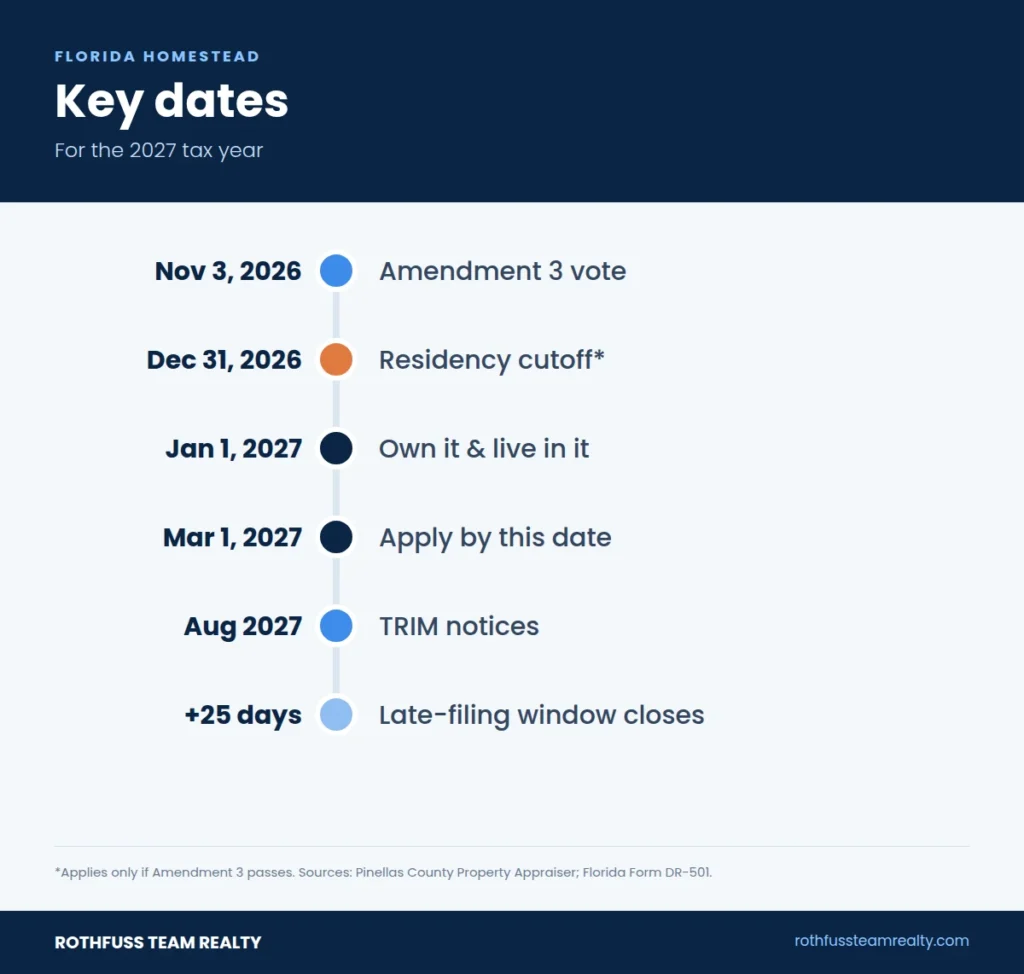
There’s no minimum length of time. You qualify if you own the home and make it your permanent residence on January 1 of the tax year. If you move in on January 2, you wait until the next year.
If you didn’t live in the home on January 1, you don’t qualify that year (Polk County Property Appraiser). Every Florida county follows the same state rule.
What does “permanent residence” mean?
A permanent residence is the home you intend to live in indefinitely. You can’t claim a residency-based tax exemption in another state at the same time.
What is the deadline to apply for the homestead exemption in Florida?
The deadline is March 1 of the tax year. For the 2027 tax year, apply between January 1 and March 1, 2027. If March 1 falls on a weekend, the deadline moves to the next business day.
Apply with the property appraiser in the county where the home is:
Most counties accept applications online. You only apply once; the exemption renews automatically while you qualify.
What if I missed my deadline to homestead in Florida?
You may still file late, up to 25 days after TRIM notices are mailed, if you had extenuating circumstances. TRIM notices go out in August, so the late window usually closes in early to mid-September (Jacksonville Property Appraiser).
The property appraiser decides whether your reason qualifies. If denied, you can petition the county’s Value Adjustment Board.
If you miss the late window too, you lose that year’s exemption. Apply by March 1 for the following year.
What is the new homestead law in Florida?
The biggest change is Amendment 3, which voters approved on November 3, 2026. It isn’t law unless at least 60% of voters approve it. Current rules stay in effect until then (Pinellas County Property Appraiser).
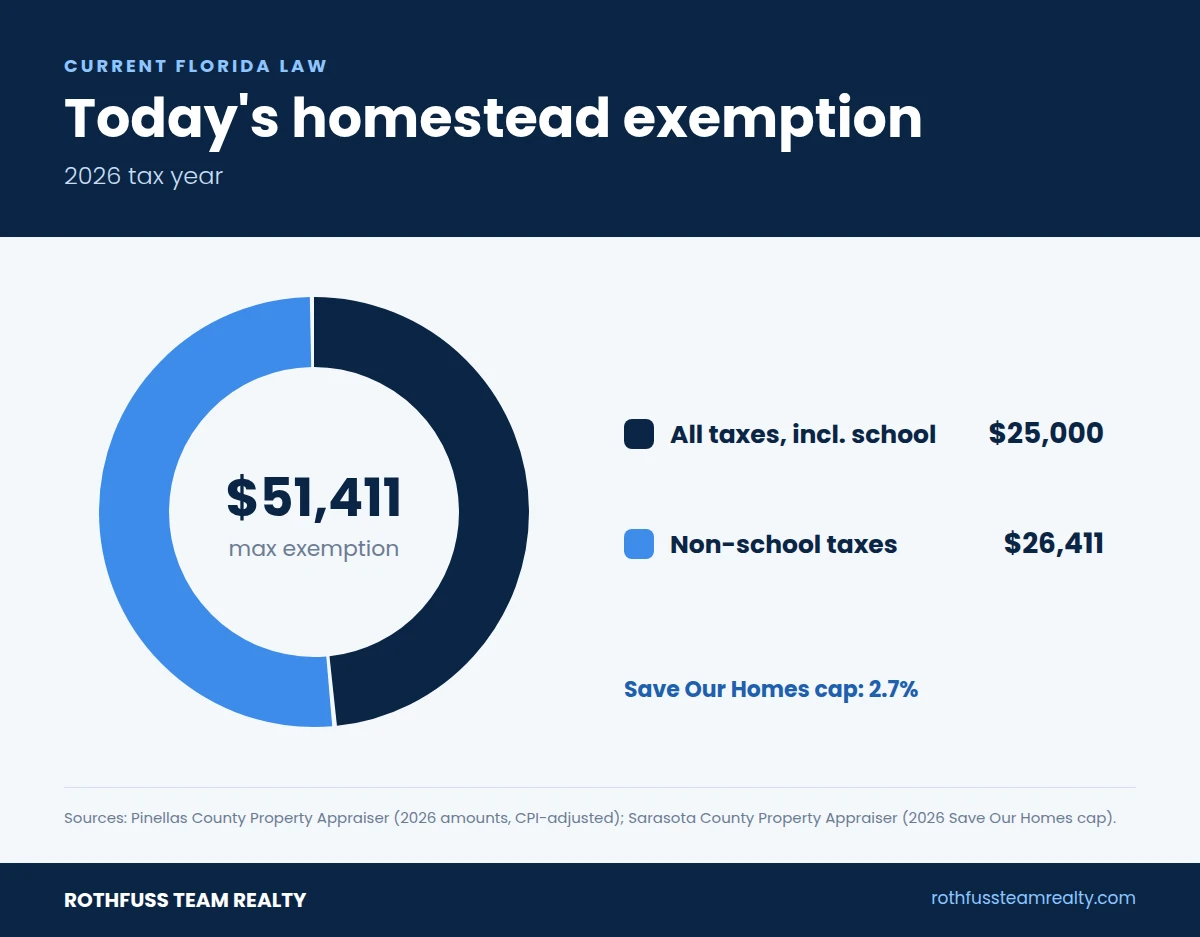
One change is already law. The second $25,000 of the exemption now rises with inflation, which is why it’s $26,411 for 2026.
What Amendment 3 changes
Amendment 3 raises the non-school homestead exemption to up to $150,000 in 2027 and up to $250,000 in 2028. The $25,000 school-tax exemption stays the same. It also cuts the cap on non-homestead assessment increases from 10% to 5%.
| | Current law (2026) | Amendment 3 (approved Nov. 3, 2026) |
School-tax exemption | $25,000 | $25,000 |
Non-school exemption | Up to $51,411 | Up to $150,000 (2027); up to $250,000 (2028) |
New residents from January 1, 2027 | Same as everyone | $50,000 for four years, then the larger exemption |
Non-homestead assessment cap | 10% | 5% |
Save Our Homes cap and portability | Unchanged | Unchanged |
Source: Pinellas County Property Appraiser, Amendment 3 FAQs.
Why December 31, 2026 matters
Under Amendment 3, people who are permanent Florida residents by December 31, 2026 qualify for the larger exemption. That holds even if they buy a Florida home later.
People who become residents on or after January 1, 2027 start at $50,000. They’d become eligible for the larger exemption in their fifth year of homestead.
What supporters and critics say
Supporters, including Gov. Ron DeSantis and Florida Realtors, say it gives homeowners significant tax relief. Critics, including sheriffs, firefighter groups and many local officials, warn it could cut local revenue sharply (WTXL, News4JAX).
Some estimates put that loss at about $12 billion a year statewide. Rothfuss Team Realty doesn’t take a position on Amendment 3.
What happens next?
Amendment 3 takes effect January 1, 2027. The Legislature still has to pass laws that fill in the details, including how residency on December 31, 2026 will be verified. January 1 still decides whether you can homestead in 2027.
What could being a Florida resident by December 31 be worth?
With Amendment 3 approved, residency by December 31, 2026 could save about $8,541 in non-school taxes over 2027–2030. The example is a Pinellas home assessed at $250,000 or more. It compares an early resident with someone who becomes a resident in 2027.
Tax year | Resident by Dec 31, 2026 | New resident in 2027 | Estimated difference |
2027 | $150,000 | $50,000 | $1,220 |
2028 | $250,000 | $50,000 | $2,440 |
2029 | $250,000 | $50,000 | $2,440 |
2030 | $250,000 | $50,000 | $2,440 |
2031 | $250,000 | $250,000 | $0 |
Total | | | $8,541 |
Non-school exemption amounts. Uses Pinellas County’s 2025 average non-school millage rate of 12.2011 mills (Pinellas County Property Appraiser). Ignores future inflation adjustments and millage changes. Illustration only.
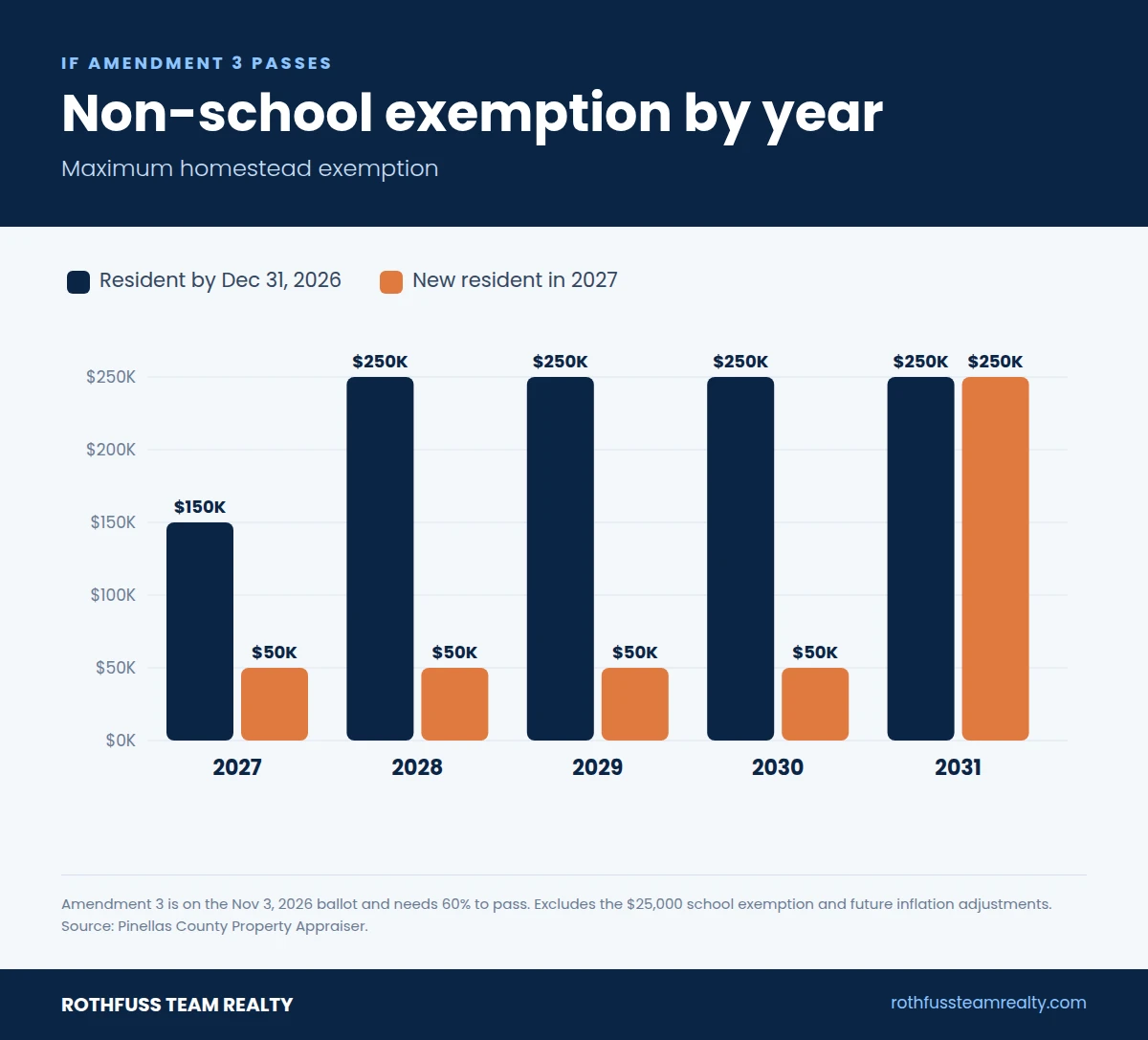
Cite this data: Rothfuss Team Realty (October 2026), using Pinellas County Property Appraiser exemption and millage figures. You may use this chart with a link to this page.
Local governments could also change millage rates or add fees, which would change these numbers. Treat them as an estimate, not a promise.
How much is the homestead exemption worth today?
Under current law, the 2026 exemption is worth up to $51,411 off your assessed value. In Pinellas, that’s about $627 in non-school taxes at the 2025 average rate. You also save school taxes on the first $25,000.
The Save Our Homes cap
Homestead also limits how fast your assessed value can rise. Increases are capped at 3% or inflation, whichever is lower: 2.7% for 2026 (Sarasota County Property Appraiser).
Portability
Selling one Florida homestead and buying another? You can move up to $500,000 of your Save Our Homes benefit. You have up to three years to establish the new homestead.
How do you prove Florida residency for homestead?
Show that Florida is your permanent home with state documents dated by January 1. The homestead application, Form DR-501, asks for proof such as these:
- A Florida driver’s license or ID card
- Florida vehicle registration
- Florida voter registration, if you’re registered
- Your recorded deed, showing you own the home
Now that Amendment 3 has passed, the Legislature may set more rules for proving residency by December 31, 2026. Getting these documents early protects you either way.
Claim homestead only if you truly qualify
Claiming homestead without genuine permanent residency can lead to a tax lien, back taxes, penalties and interest. The DR-501 form warns applicants about this (Form DR-501).
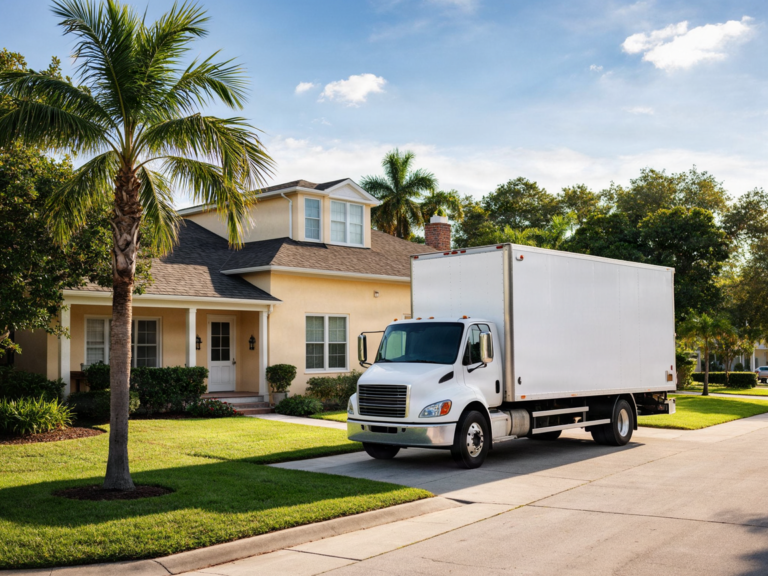
5 steps if you're moving to Florida before December 31
- Get a Florida driver’s license or ID card soon after you arrive.
- Register your vehicles in Florida.
- Update your voter registration to Florida, if you vote.
- Close on your home and move in by December 31.
- Apply for homestead between January 1 and March 1, 2027.
“Every year, buyers lose a full year of homestead over a few days. If you’re moving, plan your closing around January 1, not just your moving truck.”
— James Rothfuss II, Broker at The Rothfuss Team Realty
Key summary
To homestead for 2027, own your Florida home and live in it on January 1, 2027. Then apply by March 1. There’s no minimum residency period.
This year, December 31 may matter more. Now that Amendment 3 has passed, residents by that date get the larger exemption sooner. In Pinellas, that could be worth about $8,500 over four years.
Buying in Tampa Bay before year-end? Talk to James about timing your closing around January 1.
Frequently asked questions