
No state income tax, a growing job market and affordable real estate prices are just a few reasons Tampa is one of the best places to relocate to in 2026. The median home price is in the high $300,000s to mid $400,000s, depending on which source you use, which neighborhood you choose, and the fact that the metro crosses three counties, as well as Manatee.You can find walkable historic districts or affordable newer suburbs and the median home price is in the high $300,000s to mid $400,000s, depending on which source you consult and which neighborhood you visit. However, there are trade-offs to Florida living – high insurance, hurricane season and sizzling summers. Realistic information on things you need to know before relocating.
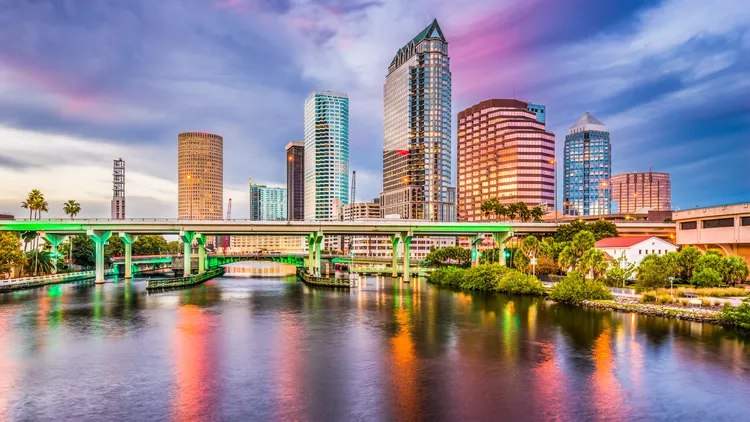
Why are so many people moving to Tampa?
Tampa draws new residents with a thriving job market, tax advantages, and an outdoor-focused way of life. The area blends big-city conveniences with natural attractions, which makes it especially appealing to families, young professionals, and retirees looking for a more affordable alternative to other major coastal cities.
Financial and lifestyle are the greatest attractions. Of course, Florida doesn’t have a state income tax, and that can play a significant role in the entire cost comparison for those moving from a high tax state such as New York, California, or Illinois — with more of your hard-earned income in your pocket. Added to that, the job market is varied and resilient here in Tampa (more on that later), the weather is warmer year-round than Miami, and the prices of homes are much more reasonable than in Miami.
But then there is the “lifestyle pull” – beaches along the Gulf, a revitalized downtown and Riverwalk, the Cuban influence on the food scene, and major events such as the Gasparilla Pirate Festival. Tampa is always the place to move to — in fact, it’s become noticeable to locals that the city has become increasingly crowded and expensive over the last several years with transplants. The popularity is the appeal as well as one of the catches.
What is the cost of living in Tampa?
On the whole, the cost of living in Tampa is about equal to the national average, depending on your source — most are within a few percentage points either way — but the chief benefit is that the state doesn’t have an income tax. Despite the rapid increase in housing prices since 2020, several cost-of-living indexes actually classify Tampa’s housing as below average in comparison to the rest of the country. To give you some context for your budget, here are a few real numbers for 2026 (estimates):
- The marquee benefit – no state income tax.
- Sales tax: 7.5% (6% Florida + 1.5% Hillsborough County).
- Property Tax: about 0.89% of the house value, which is approximately $3,400 per year on a median-priced home, near the national average.
- Electricity costs: $220 – $245 per month.
- Electricity: approximately $0.15/kWh, which is below the national average.
- Gas: about $3/gallon, near the national average.
The straight lender-to-lender parting shot for relocators: The item that surprises buyers is not on most cost-of-living calculators: homeowners insurance, and that is one of the most expensive in the country here (see below). Don’t get in love with a house before you budget for it.
How much do homes cost in Tampa?
This is where the numbers can differ greatly depending on the source and depending on how “Tampa” is defined. Across 2026 data, median home prices range roughly from the high-$300,000s to the mid-$400,000s — one source cites ~$385,000, another ~$455,000, and “things to know” guides put the working range at $380,000–$450,000 depending on neighborhood.
Tampa home prices vs. other Florida metros (2026)
Tampa undercuts Miami considerably while offering big-metro amenities. Approximate medians — figures vary by source.
2026 estimates compiled from public sources, which vary in how each metro is measured. Tampa's range reflects differences across data providers. Verify current figures before relying on them.
The bottom line is not the dollar amount, but comparing Tampa to Miami (which is often touted at $675K) shows it is significantly lower and has amenities similar to big metros. The disparity is enormous here in Tampa, as premiums are enjoyed in the areas of South Tampa, Hyde Park, and the high cost of living areas of Pasco County (Wesley Chapel and Land O’Lakes), while the areas of Seminole Heights, some parts of Brandon offer more reasonable entry points.
Which Tampa neighborhood is right for me?
It comes down to your priorities — walkability, schools, budget, or commute. Here’s a quick orientation by lifestyle:
Find your Tampa neighborhood by lifestyle
Tampa isn't one market — it's many. Here's a quick orientation by what matters most to you.
Walkable & historic
For character & community over space
Seminole Heights · Hyde Park
Bungalows, breweries, dining, central location. Higher prices in Hyde Park.
Premium & central
For lifestyle & prestige
South Tampa · Palma Ceia · Ballast Point
The most sought-after area — premium prices and notable flood-zone exposure.
Family suburbs
For space & schools
New Tampa · Westchase · Wesley Chapel
Newer construction, larger lots, strong schools. Often HOA & CDD fees.
Most affordable entry
For value & newer builds
Pasco County · Riverview · Land O'Lakes
Lower price points, newer homes — popular with first-time & relocating buyers.
A general orientation, not a substitute for neighborhood-level guidance. Prices, flood zones, and fees vary by street — ask a local agent before you commit.
- Walkable & historic: Seminole Heights (craftsman bungalows, breweries, a creative scene) and Hyde Park (upscale, walkable, premium prices).
- Premium & central: South Tampa — the peninsula’s most sought-after area (Palma Ceia, Ballast Point), with higher prices and notable flood-zone exposure to factor in.
- Family suburbs: New Tampa, Westchase, and Wesley Chapel — newer construction, larger lots, strong schools, and planned communities (often with HOA and CDD fees).
- Most affordable entry: Pasco County (Wesley Chapel, Land O’Lakes) and Riverview — newer builds, lower prices, popular with first-time buyers and relocating families.
The lesson every relocator learns: Tampa isn’t one market, it’s many. A citywide median tells you almost nothing about the street you’ll actually live on. Local, neighborhood-level guidance matters more here than in most cities.
What's the job market like in Tampa?
Tampa is a diverse and resilient economy, as you want to be when relocating without a job. It is not exclusively based on any single sector such as financial services, healthcare, technology, defence or tourism. Some of the largest employers are Tampa General Hospital, BayCare Health, MacDill Air Force Base, JPMorgan Chase, USF, Raymond James, Citigroup, USAA and Moffitt Cancer Center.
The tech industry has also expanded significantly, bringing talent with it from the University of South Florida and the University of Tampa, and attracting companies from higher cost metros. Tampa combines a great lifestyle with practicality for people who work remotely — Tampa Airport ranks among the top mid-sized airports in the country. The metro has continued to grow in population, jobs and typically is around the national average.
Navigating the Moving Process: Tips for a Smooth Transition
Moving to a new city can be both exciting and overwhelming. To ensure a smooth transition to Tampa, it’s important to plan ahead and take advantage of available resources. Start by creating a detailed moving checklist that outlines all the tasks you need to complete before, during, and after the move. This can include everything from finding a moving company to updating your address and setting up utilities.
One of the first steps in the moving process is to declutter and organize your belongings. Take the time to go through each room and decide what you want to keep, donate, or discard. This will not only make packing easier but also reduce the amount of stuff you need to move. Consider holding a garage sale or donating items to local charities to lighten your load.
When it comes to packing, start early and tackle one room at a time. Use sturdy boxes, packing tape, and bubble wrap to protect your belongings. Label each box with its contents and the room it belongs to, making unpacking much easier. If you’re hiring a moving company, research and get quotes from several companies to find the best option for your needs. Make sure to read reviews and check for any hidden fees.
Once you’ve arrived in Tampa, take the time to familiarize yourself with your new surroundings. Explore your neighborhood, locate essential services like grocery stores and healthcare facilities, and introduce yourself to your neighbors. This will help you feel more settled and connected to your new community. Additionally, make sure to update your address with the post office, banks, and any other relevant institutions to ensure a smooth transition.
Local Schools and Education Options in Tampa
For families moving to Tampa, education is likely a top priority. Fortunately, Tampa offers a wide range of educational options to suit different needs and preferences. The Hillsborough County Public School District, one of the largest in the state, serves the area and provides a variety of programs and services to support student success.
Public schools in Tampa are known for their commitment to academic excellence and extracurricular opportunities. Many schools offer specialized programs such as International Baccalaureate (IB), Advanced Placement (AP), and magnet programs that focus on areas like science, technology, engineering, and mathematics (STEM). Researching and visiting schools in your desired neighborhood can help you find the best fit for your child’s needs.
In addition to public schools, Tampa is home to numerous private and charter schools that offer alternative educational approaches. These schools often provide smaller class sizes, unique curricula, and specialized programs. Some of the top private schools in the area include Berkeley Preparatory School, Tampa Preparatory School, and Academy of the Holy Names. Charter schools, which are publicly funded but operate independently, also offer diverse educational options and can be a great choice for families seeking a specific focus or teaching style.
For higher education, Tampa boasts several reputable colleges and universities. The University of South Florida (USF) is a major research institution with a wide range of undergraduate and graduate programs. The University of Tampa, a private university, offers a beautiful campus and a strong liberal arts education. Other notable institutions include Hillsborough Community College and Stetson University College of Law. These educational opportunities ensure that residents have access to quality education at all levels.
Fun Activities and Attractions in Tampa
Tampa is a city that offers endless entertainment and recreational opportunities for residents and visitors alike. Whether you’re a sports enthusiast, a nature lover, or a culture aficionado, there’s something for everyone in this vibrant city.
One of Tampa’s most famous attractions is Busch Gardens, a thrilling amusement park that combines exhilarating rides with a world-class zoo. Visitors can experience heart-pounding roller coasters, get up close with exotic animals, and enjoy live shows and entertainment. Busch Gardens is a must-visit destination for families and adventure seekers.
For those who enjoy the outdoors, Tampa’s beautiful parks and nature preserves offer plenty of opportunities for hiking, biking, and picnicking. The Hillsborough River State Park, Lettuce Lake Park, and Al Lopez Park are just a few of the many green spaces where you can relax and enjoy the natural beauty of the area. Tampa’s Riverwalk, a scenic pedestrian path along the Hillsborough River, is perfect for a leisurely stroll or bike ride and offers stunning views of the city skyline.
Tampa’s cultural scene is equally impressive, with a wide range of museums, theaters, and galleries to explore. The Tampa Museum of Art, the Florida Museum of Photographic Arts, and the Ybor City Museum State Park are just a few of the cultural institutions that showcase the city’s rich history and artistic talent. The Straz Center for the Performing Arts offers a diverse lineup of shows, including Broadway productions, concerts, and dance performances.
Sports fans will also find plenty to cheer about in Tampa. The city is home to several professional sports teams, including the Tampa Bay Buccaneers (NFL), the Tampa Bay Lightning (NHL), and the Tampa Bay Rays (MLB). Catching a game at one of the city’s state-of-the-art stadiums is a fantastic way to experience the excitement and camaraderie of Tampa’s sports culture.
What are the downsides of moving to Tampa?
An honest relocation guide needs to discuss the pros and cons—and Tampa has cons:
- High hazard of hurricanes and insurance costs. This is the large guy. Florida homeowners insurance is one of the most costly types of insurance in the United States, due to hurricane and flood exposure. Also, some residences need stand-alone flood insurance. Don’t finalize a home until you get an insurance quote; rates can be widely different depending on the place and flood zone.
- Brutal summers. High humidity (around 74%) with near daily afternoon thunderstorms and high temperatures during the summer months (May – October).
- Reliance on cars and traffic. There is limited public transportation (buses and the downtown streetcar), a car will be necessary. Traffic on I-4 and congestion due to growth are common issues.
- Increasing expenses and congestion. Transplant wave has led to increase in prices and crowding compared to 5 years ago.
Preparing for the Climate: What to Know About Tampa Weather
Tampa’s climate is one of the many reasons people are drawn to the area. The city enjoys a subtropical climate, characterized by hot, humid summers and mild, dry winters. While the weather is generally pleasant, it’s important to be prepared for the unique climate conditions that Tampa offers.
Summers in Tampa can be quite hot, with temperatures often reaching the high 80s and 90s (Fahrenheit). The humidity can make it feel even warmer, so it’s essential to stay hydrated and take precautions to avoid heat-related illnesses. Air conditioning is a must during the summer months, and many homes, businesses, and public spaces are equipped to keep you cool and comfortable. Afternoon thunderstorms are common in the summer, providing a brief respite from the heat and helping to cool things down.
Winters in Tampa are mild and pleasant, with temperatures typically ranging from the mid-50s to the 70s (Fahrenheit). This makes it an ideal time for outdoor activities and enjoying the beautiful surroundings. While snowfall is extremely rare, it’s still a good idea to have a light jacket or sweater on hand for cooler evenings.
One important aspect of Tampa’s climate to be aware of is the hurricane season, which runs from June to November. While Tampa is not as frequently hit by hurricanes as some other parts of Florida, it’s still crucial to be prepared. Familiarize yourself with the local emergency management procedures, have a hurricane preparedness kit ready, and stay informed about weather updates during the season. Understanding and preparing for these weather conditions will help you make the most of Tampa’s beautiful climate.
How do I buy a home if I'm relocating from out of state?
The key to success is working with a local agent early and relying on the use of virtual tools. Out-of-area buyers are successful when they work with a professional who is familiar with the neighborhoods block-by-block, when they utilize the virtual tour and video walkthrough, obtain the out-of-area buyer pre-approval with a Florida local lender who understands the local insurance scene, and make one in-person visit to tour a short list of walkthroughs.
Here are a few tips unique to the Tampa area: Use a flood insurance agent as part of your home search process, be aware of the heights of the HOA and CDD fees in planned communities and arrange movers early as the best dates to move are May through August, and it fills up quickly. The duration of a normal contract-to-close is roughly 30-45 days.
The bottom line here: Tampa is a city that is open to relocators willing to do their homework. Aside from the financials, which are legitimate — no income tax, prices are significantly lower than Miami, a variety of employment options — the negative aspects are just as real: high insurance, hurricane season, heat summers and a car-dependent design. With their sprawling reach, there’s really a metroside home for every budget and lifestyle, ranging from walkable bungalows from the past to budget-friendly new suburbs. It’s choosing the right neighborhood for your needs and picking a professional that is familiar with the terrain; after all, the average numbers in Tampa cover all the important factors in choosing a neighborhood.
Frequently Asked Questions
Suburban areas like New Tampa, Westchase, and Wesley Chapel are popular with families for newer homes, larger lots, and strong schools, though many planned communities carry HOA and CDD fees.
Start by decluttering, making necessary repairs, and boosting curb appeal. Our team can provide a detailed walk-through to help you prioritize.
No. Florida has no state income tax, which is one of the biggest financial draws for people relocating from higher-tax states. Residents still pay sales tax (7.5% in Tampa) and property taxes.
