Amendment 3 and Your Tampa Home: What Buyers and Sellers Need to Know Before December 31


Florida’s Amendment 3, on the November 3, 2026 ballot, would raise the homestead exemption on non-school property taxes to $150,000 in 2027 and $250,000 in 2028. The larger exemption goes to people who are permanent Florida residents by December 31, 2026. People who move here later wait until their fifth year. Here’s what that means if you’re buying, selling or already own a home in Tampa Bay.
TL;DR
- What it does: raises the homestead exemption on non-school property taxes to $150,000 in 2027 and $250,000 in 2028, and lowers the yearly assessment cap on non-homestead property from 10% to 5%.
- The deadline is about residency, not closing. Official property appraiser guidance says permanent Florida residents as of December 31, 2026 qualify, even if they buy a home later.
- New residents wait. People who become residents in 2027 or later start with $50,000 and get the larger exemption in their fifth year of homestead.
- It needs 60% of the vote. If it fails, nothing changes.
- Your November 2026 tax bill won’t change either way. The first bills affected would arrive in November 2027.
What is Florida's Amendment 3?
Amendment 3 is a proposed change to Florida’s constitution that cuts property taxes on homesteaded homes and slows tax increases on rentals and second homes. Its official ballot title is “Increased Homestead Exemption; Lower Cap on Increases in Non-Homesteaded Property Assessments.” Here’s how it compares with current law:
Today | If Amendment 3 passes | |
Homestead exemption, non-school taxes | $51,411 in 2026 | Up to $150,000 from January 1, 2027, and up to $250,000 from January 1, 2028, adjusted for inflation from 2029 |
Homestead exemption, school taxes | $25,000 | $25,000 (unchanged) |
Yearly cap on assessment increases, rentals and second homes | 10% | 5% for non-school taxes |
Save Our Homes cap and portability | In place | Unchanged |
New residents (from 2027) | Same exemption as everyone | Start at $50,000, with the larger exemption from their fifth year of homestead |
Source: Pinellas County Property Appraiser, Amendment 3 FAQs.
Like every constitutional amendment in Florida, it needs at least 60% of the vote. A court ordered parts of the original ballot wording rewritten in August 2026. The version on your ballot no longer promises to eliminate property taxes, because it doesn’t.
How much could a Tampa Bay homeowner save?
About $1,200 in 2027 and $2,400 in 2028 for an eligible homestead, based on the Pinellas County Property Appraiser’s example. That example assumes the home gets the full extra exemption and that tax rates stay at the 2025 countywide average for non-school taxes. Your own savings depend on your home’s taxable value and your local tax rates.
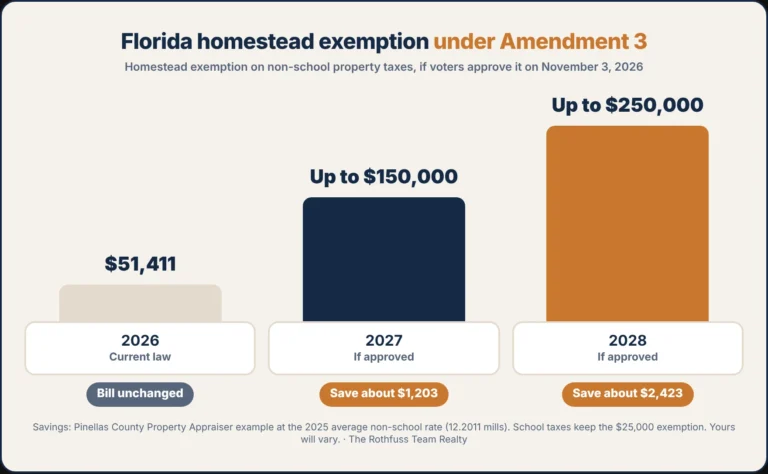
Hillsborough County Property Appraiser Bob Henriquez told Bay News 9 that the average homeowner could save about $2,000 once the amendment is fully in place. He also cautioned, “It’s not a one size fits all.”
A few things the amendment doesn’t reduce:
- School taxes, which keep the current $25,000 exemption.
- Non-ad valorem assessments such as stormwater, solid waste and special district fees. These are charged separately and the homestead exemption doesn’t apply to them.
- Tax rates. Local governments still set their own millage rates each year.
You’ll still get a property tax bill every year. Henriquez put it simply: “You will still receive a property tax bill each year.”
What does the December 31, 2026 deadline actually mean?
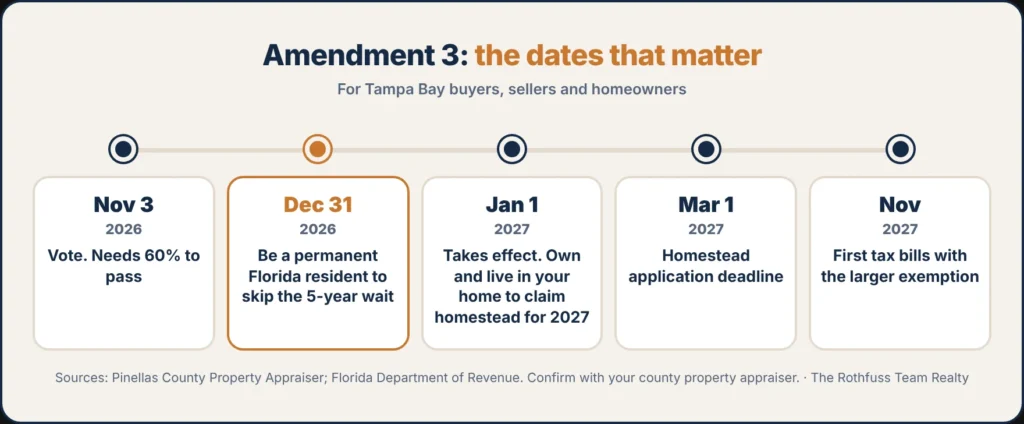
To get the larger exemption without the five-year wait, you need to be a permanent Florida resident by December 31, 2026. Some news coverage says you must be “homesteaded” by that date, but official guidance focuses on residency. The Hamilton County Property Appraiser’s FAQ says permanent residents as of December 31, 2026 “would be eligible for the new, larger homestead exemption when they do choose to purchase a residential property.”
That’s two separate questions:
- When did Florida become your permanent home? That’s what the December 31, 2026 deadline is about.
- When does a specific house become your homestead? Under Florida’s existing rules, you need to own the home and live in it as your permanent residence on January 1 of the tax year, and file your homestead application by March 1.
To show Florida residency, your property appraiser may ask for a Florida driver’s license or ID, a Florida vehicle registration, Florida voter registration, a declaration of domicile, or utility bills at your Florida address, according to the Florida Department of Revenue.
The amendment hasn’t passed yet, and the Legislature still has to pass laws that fill in the details. Confirm your situation with the Hillsborough, Pinellas or Pasco County property appraiser, or with a Florida real estate attorney.
Moving from the Midwest? Our guide to moving from Chicago to Riverview covers Illinois residency rules too.
Should you buy a home in Tampa before December 31?
It depends on where you live now. Here’s how it plays out for the buyers we work with most:
- You already live in Florida and rent. The official guidance suggests you don’t need to rush to close. If you’re a permanent resident by December 31, you’d qualify for the larger exemption whenever you buy. Buying before January 1 still matters for a separate reason: it lets you claim homestead for 2027 instead of 2028.
- You’re moving to Tampa Bay from another state. This is the group with a real deadline. Becoming a permanent Florida resident by December 31 avoids the five-year wait. Buying a home is one way to show residency, but renting first and changing your license, car registration and voter registration may also count.
- You’re buying a rental or second home. The homestead exemption doesn’t apply, but the lower 5% cap on yearly assessment increases would slow how fast your non-school taxes can rise.
- You already own a Tampa home and want to move within Florida. Portability is unchanged, so you can still carry your Save Our Homes savings to your next homestead.
- Before you decide, add up the full cost of buying a home in Tampa, including closing costs and insurance.
Should you sell before or after the November 3 vote?
If Amendment 3 passes, sellers could see more out-of-state buyers trying to establish Florida residency before December 31. Jeff Lichtenstein, a Palm Beach Gardens broker, told WPTV on October 16, “I think there will be a mad rush to get in here, because if not, then you’re waiting five years.”
Three things to weigh if you’re thinking about listing:
- Buyer demand. A deadline tends to bring motivated buyers. Listing in November puts your home in front of them.
- The current market. The median listing price in the Tampa-St. Petersburg-Clearwater metro was $385,398 in September 2026, down 6.6% from a year earlier, according to Realtor.com data.
- Your own taxes. If you’re selling to buy another Florida home, portability still lets you carry your Save Our Homes savings with you, and as an existing resident you’d keep access to the larger exemption.
According to James Rothfuss, the Rothfuss Team Realty founder that the best time to list the homes is October because December is one of the highest closing months due to all of the snowbirds in town.
What happens if Amendment 3 doesn't pass?
Nothing changes. Current homestead exemptions, the Save Our Homes cap and the 10% cap on non-homestead property all stay as they are. The December 31 deadline would no longer matter.
Could Amendment 3 change local services or fees?
Possibly. Cities and counties would collect less property tax. Henriquez said unincorporated Hillsborough County could lose as much as $300 million, and some local leaders are discussing new fees, which the homestead exemption doesn’t cover. He also said “core services will get the first bite of the apple.” How each city and county responds will show up in future budgets and tax notices.
Amendment 3 FAQs
On November 3, 2026, at the general election. It needs at least 60% of the vote to pass. If approved, it takes effect January 1, 2027, and the first tax bills affected arrive in November 2027.
Not necessarily. Official property appraiser guidance says people who are permanent Florida residents as of December 31, 2026 qualify for the larger exemption when they buy a home later. Confirm your situation with your county property appraiser.
They start with a $50,000 homestead exemption on non-school taxes, adjusted for inflation from 2028. The larger exemption applies from their fifth year of homestead, after keeping a Florida homestead exemption for four years.
No. The homestead exemption for school taxes stays at $25,000, and school taxes on non-homestead property are still based on market value.
No. Your 2026 bill is unchanged whether or not Amendment 3 passes. If it passes, the changes first appear on August 2027 TRIM notices and November 2027 tax bills.
Yes, indirectly. Rentals don't get the homestead exemption, but the yearly cap on assessment increases for non-homestead property would drop from 10% to 5% for non-school taxes.

Broker and owner of The Rothfuss Team Realty. 30+ years in business and 60+ properties bought and sold across Tampa Bay.
More about the teamAsk a questionLinkedIn